
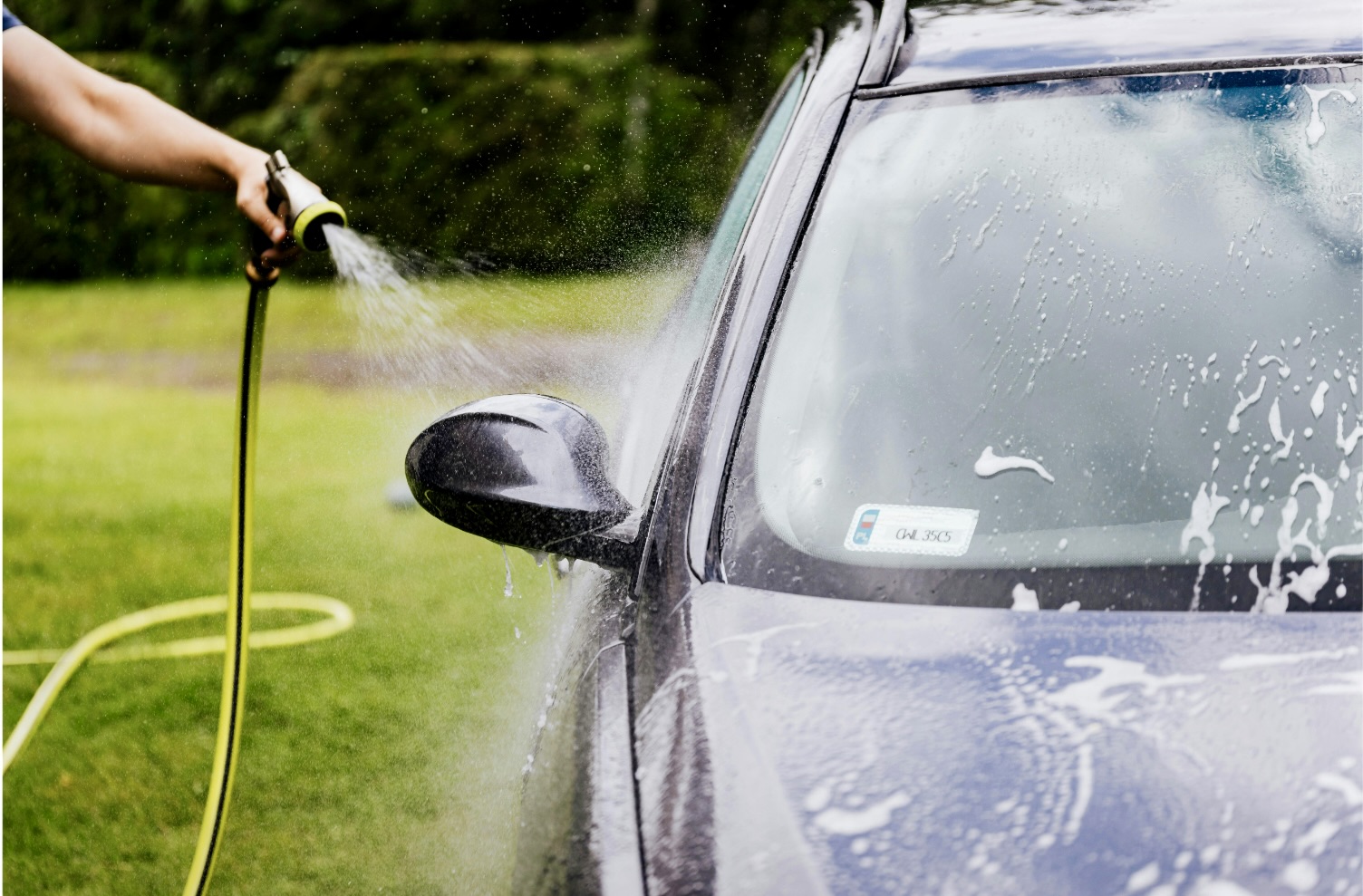
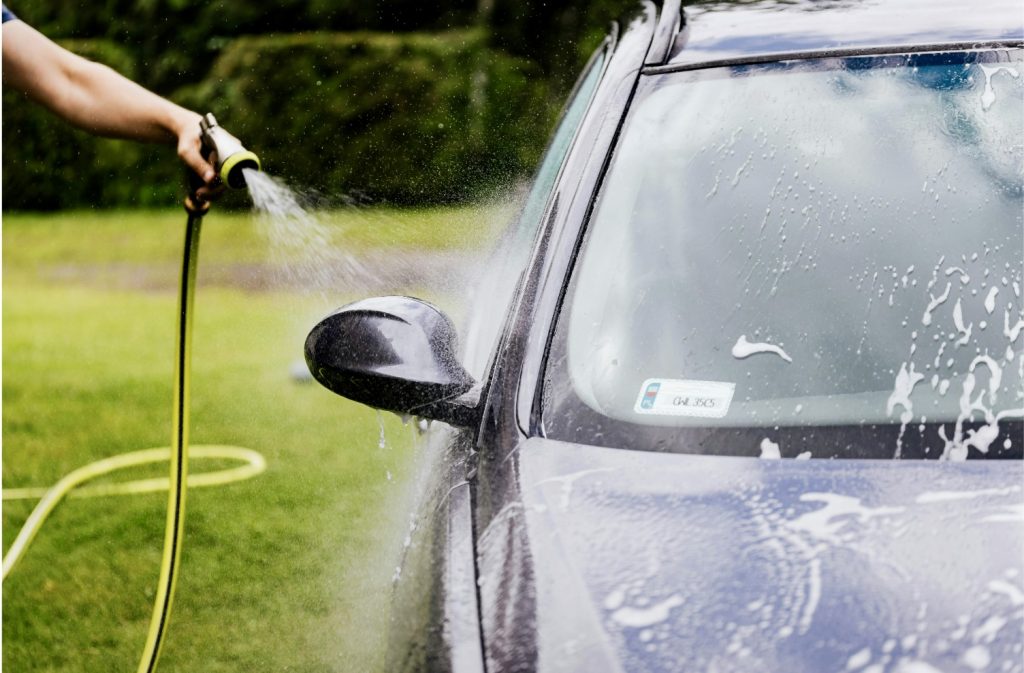
A common sight throughout the warmer months of the year is the classic at-home car wash. While this practice can certainly help save money, it can also become a source of pollution to our local streams. This is because the soap and grime rinsed from our cars often flow into local storm drains. Storm drains are not routed to water treatment facilities; instead, they drain directly into nearby streams and other waterways. When pollutants from washed cars enter the environment, they can be toxic to the plants and animals that live there.
Luckily, there are two ways to minimize these impacts.
- Wash your car in a grassy area rather than a paved surface. Our lawns can absorb and filter some of the water that comes off our cars during washing, which means less pollution will get into the storm drain.
- Use a local commercial car wash. These facilities are designed to properly dispose of the pollutants and soap left over from the cleaning process, and they often filter and recycle the water they use onsite.
Washing your car can have a considerable effect on local water quality, but it’s not the only way our cars can cause water pollution. Vehicles that have not received regular maintenance can begin to leak chemicals such as oil, gasoline, and other fluids. When these pollutants drip onto roads and driveways, they can be carried by stormwater into storm drains.
Keeping your car on a regular maintenance schedule is a great way to prevent leaks. If you work on your car at home, remember to properly store and dispose of any chemicals or fluids used in the process. For example, when changing your car’s oil, be sure to store the used oil in a polyethylene or similar plastic container. You can then drop it off at a local recycling center that accepts oil or even some automotive part stores to be recycled. Check out the links below for motor oil recycling options near you:
By taking care of our vehicles, we can also help take care of our streams!