
At a certain point in a birdwatcher’s progression through the hobby, they may reach a point when some species are so well known to them that identification almost becomes second nature. These birds may be regionally common, have unique coloration, or have iconic songs with easy-to-learn pneumonic devices. With this increase in skill comes a pitfall that I fell into at one point: a loss of appreciation for the often seen. No species is more emblematic of this phenomenon than the song sparrow, Melospiza melodia. Let’s pay this bird its due respect.
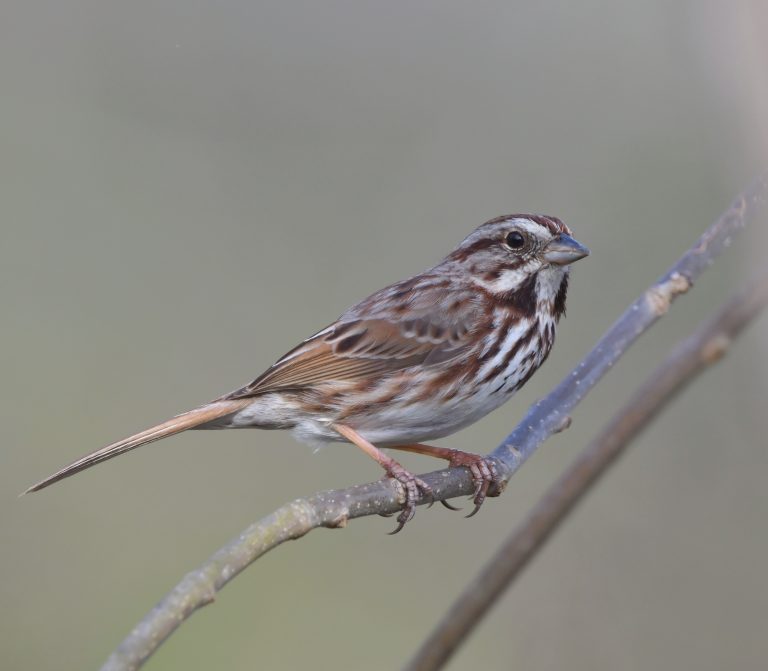
Song sparrows lay claim to open fields, wetlands, and scrubby areas across wide swathes of the contiguous United States. In these habitats, this species is often the most common sparrow birders will encounter. Unlike some of their more cryptic relatives, song sparrows are quick to make their presence known. As the name suggests, you’ll often hear them before you see them as males sing their long, complex songs from atop small trees and other perches. They also make short, single-note calls as they move through the landscape. When you do get a look at a song sparrow, you’ll notice its heavily-streaked plumage converging in the center of the breast as well as bold lines along the head and through the eye. Song sparrows often show two triangular patches of brown on either side of the throat, as seen in the photo. Notable variations in plumage occur in different populations throughout the country. Song sparrows in the Pacific Northwest, for example, are notably darker than those found in Ohio.
Beauty may be in the eye of the beholder, but few would count the song sparrow among our most eye-catching songbirds. Its song is complex and interesting, but it lacks the melodious nature of other performers. Yet despite all this, the song sparrow demands attention. This species ranks among the boldest of Ohio’s birds; it will often tolerate humans standing close by as it forages or sings. This allows us to spend more time in close proximity to them compared to more skittish or uncommon species. For every hooded warbler, rusty blackbird, and sandhill crane I’ve found, there were dozens of song sparrows that occupied my time along the way.
The song sparrow invites us to appreciate birds for the sake of birds, rather than the sake of more “sporting” attributes we impose on a given species (rarity, difficulty to spot/photograph, etc.). It brings me back to the roots of the hobby: just experiencing the animal as it goes about its life. By revisiting this core tenant of birding, I’ve found that not only do I enjoy my time with common species more, I also have a greater appreciation of my encounters with rarities. Though the overall population has declined over the past few decades, there are still approximately 130,000,000 song sparrows in the world. The chorus may be shrinking, but any venture outdoors will confirm that it has yet to lose its vigor. Hopefully, conservation efforts will lead to stable populations that will continue to accompany all those enjoy the outdoors.